The Questions That Simply Won’t Go Away
By Springwolf – Updated 11/2013
It’s a continual question from those who don’t know racing and don’t take the time to learn:
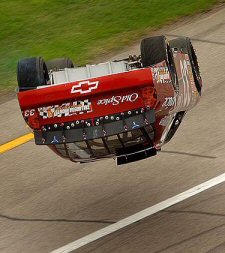 Every year some ‘sports writer’ or newspaper columnist voices the question and then attempts to answer it by saying Nascar is just a southern activity attended by beer drinking rednecks. They profess to know more than the millions of fans who watch their favorite driver, team and races by claiming that Nascar isn’t a sport and the drivers aren’t athletes. “All they do is make left turns and waste gas” is their typical line.
Sadly their rhetoric is voiced by the millions of people who don’t have a clue what racing is about. Add to that the age of Twitter and Facebook which gives a platform to people to degrade and put down anyone who does see things the way they do.
After a while it does get annoying and fans of Nascar sometimes feel the need or desire to respond to these questions. We all know it falls on deaf ears and rarely makes a difference. But many of us love our sport and want to defend it against those that simply use stereotypical put-downs to degrade something they don’t understand.
Is Nascar A Sport?
Let’s try to rise above the fray and actually answer the questions from an academic perspective.
According to Webster’s, the word Sports is defined as:
1a. a source of diversion, recreation
1b. a physical activity engaged in for pleasure
3a. something tossed or driven about in or as if in play.
 By definition Nascar is a sport.
It is a source of diversion for those who love to watch racing. For drivers, crews and owners it is something they do and enjoy doing. We can even say they do it for pleasure as many of them started racing not for the big pay checks. But as kids who spent their weekends with Mom and Dad doing something they enjoyed doing. And it’s definitely something that is driven about.
So let’s put this question to rest once and for all. Nascar is a sport. Loved by millions of fans, north, south, east and west. With race tracks all over the country, it’s not just a “southern” thing. It’s an American thing! And we’re not all rednecks who dropped out of high school, or never set foot on a college campus. Evil and I both have college degrees and are professionals at work and at the track.
Each weekend you’ll find lawyers, accountants, doctors, computer techs and geeks of all kinds in the stands. You’ll see men and women, people of all ages and yes, even from all races and nationalities cheering on their favorite team or driver. If you’ve never actually been to a race, try going once. You might even have a good time.
Are Drivers Athletes?
I’ve updated this article to include the dictionary definition of Athlete in response to a comment and tweet by @donovanjmcnabbabout Jimmie Johnson:
| space | “Do I think he’s an athlete?” McNabb said. “Absolutely not. … He’s not an athlete. He sits in a car and he drives so that doesn’t be athletic. I give him credit to what he’s been able to do.”The later tweet: .. If you have any questions to what I said, look up the word [Athlete] and you will have your answer. ~ November 16, 2013 – I think Donovan should have looked up the word first. |
Ok, here you go, the Dictionary definition of Athlete:
a person trained or gifted in exercises or contests involving physical agility, stamina, or strength; a participant in a sport, exercise, or game requiring physical skill.
Well by that definition, yep Drivers are athletes. They are certainly gifted. Not everyone can drive a car of any type 3 inches away from another car at 200mph without crashing and running into everything around them. So there’s that one.
They have proven to have agility, stamina and strength. The agility isn’t often seen until an accident does happen. The gifted well trained drivers can manipulate the steering wheel in conjunction with breaks and gas to regain control of a car previously going over 100mph and more. If you don’t think stamina and strength are involved, keep reading.
But let’s look at this idea of drivers being athletes from the science and anecdotal evidence from other athletic sports figures and even your own driving experience. It’s not only the definition that proves Nascar Drivers are Athletes.
The Athletics Of Driving
With 30 years of experience in motor sports, Dr. Stephen Olvey, director of the neurosurgical care unit at Jackson Memorial Hospital in Miami, was determined to show that race car drivers measured up to traditional athletes, CNN reports. Through his work, he has determined that Nascar Drivers definitely do measure up. But let’s not just take his word for it and take a broader look.
Safety improvements do nothing for what happens to a driver while sitting in the car, and driving around the track during a race. The first thing to note here is that endurance is part of being an athlete. A football player who catches a ball and can run 10 yards isn’t an athlete. Anyone who can’t endure the physical stress and exertion placed on a driver during a race will not succeed in a car no matter which direction it’s turning.
Dr. Sanja Gupta from CNN took the opportunity to go through the Richard Petty Driving Experience. He donned a racing fire suit, got into a car and began reporting on the effects.
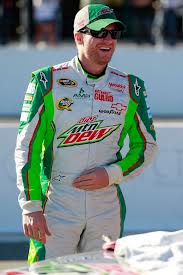
Dale Earnhardt Jr.,
Daytona 500 Champion
- Just sitting in the car waiting his turn to get onto the track his heart rate was up, as was his breathing and he hadn’t even started driving yet.
- His body temperature was raised to that of a fever, between 101 and 102.
- After the second minute of driving his heart rate jumped from 88 beats per minute to 130.
- His metabolic rate (how much oxygen is consumed), was four times more than his resting metabolic activity. That means he used four times as much oxygen as when he’s just sitting in a chair and not doing anything.
Dr. Patrick Jacobs at the University of Miami studies Racecar drivers and their physical condition. Dr. Gupta asked him: would you describe Nascar as a physically challenging activity? Dr. Jacobs replies: “Most undoubtedly. Very challenging in terms of physical fitness, and what they have to face.”
The heart rate of a Nascar driver goes from that of marathon runner to a sprinter throughout a race. The anticipation of the race causes a drivers heart rate to increase even before they take the track. Physical conditioning is a key component to living through that type of exertion each and every week.
For an average marathon runner, the heart rate during the race will range from 132 to 142 beats per minute. This is equivalent to what an elite Nascar driver experiences during a race. The longer a Driver’s career, the less this anticipation plays a part. They not only condition their physical body, but also their mental psyche. So what keeps a veteran driver’s heart rate up if it isn’t anticipation?
Once on the track, the upper body puts forth a great deal of exertion in muscle usage and control to turn that 3,400 lbs car around a corner with g-forces pushing the car in the opposite direction. But it’s not only the upper body that flexes it’s muscles during a race. The same forces are being pushed on a drivers legs, yet they must maintain stable control over their lower body in order to work the gas and break peddles.
Between the physical exertion and anticipation, a driver’s heart rate increases to that of a sprinter if an incident occurs on the track and the driver has to quickly respond to avoid other cars, the safety barriers/walls and maintain control of their car. But there are more pressures on the physical body than heart rate.
In her book The Physics of NASCAR, author Diandra Leslie-Pelecky wrote that “NASCAR drivers routinely experience 2 to 3gs in the turns. While 1g is the force we normally feel, Space Shuttle astronauts feel a 3g force on launches.”
 NASCAR races are not held exclusively on straightaways, there must be a force that pushes cars as they make turns on the track. The banking in the corners vary from track to track and it’s that banking that creates the greatest force on a drivers body. These turns can last 5-20 seconds forcing drivers to experience 2-3 G’s on turns. The more steep the banking, the greater the force. A few of the series tracks can push drivers to experience G’s greater than 3-times normal and while they are going through this force, they must increase arm and hand control to turn the car.
Physicist Brian Beckman has authored a series of articles on the physics of racing. “If you weigh 200 pounds, at 5 G’s you’re being pushed sideways at 1,000 pounds.” Beckman says during the worst crashes, drivers can, for a split-second, experience 20 to 50 G’s. “They crash into those walls, and they just rebound from them and take a big spike” of G forces.
The reason drivers feel that force can be explained by Isaac Newton’s first law. Known as the Law of Inertia. It states that “Every object persists in its state of rest or of moving uniformly straight forward unless it is compelled to change that state by forces impressed on it.”
This inward-pointing force is called the centripetal (which means “center-seeking”). Anyone that has taken an exit ramp from the highway, turning right at 50 or even 40mph, knows how your body feels the force of the turn. Now multiply the speed of your turn to 100mph or more. It takes a bit of muscle to maintain the turn and to control it, not only in your arms, but your entire body. Pay attention to that next time you’re driving somewhere. Be conscious of how your arms and legs tighten to hold you securely in your seat.
Beckman has also noted the experience of heat upon professional drivers. Because of the design of the cars, Indy drivers do not experience the same excessive heat as Nascar drivers do. “The insides of those race cars are well over 120 degrees during a race, and they are encased inside five-layer, fireproof suits.” This increased heat means drivers are using up their water supply and can quickly become dehydrated if they don’t replenish fluids during the race.
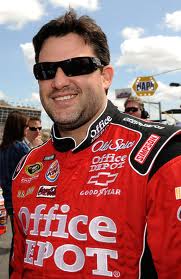
Tony Stewart,
3-Time Nascar Champion
Dehydration is a danger in all sports, but an athlete outside a fire suit can stand in front of a fan and find some manner to cool off for a few moments before going back into the game. Drivers don’t have that luxury. They experience this increased heat for as little as 2.5 hours to 4 or more. And when you’re driving 180-190 mph or more, the danger of heat exhaustion increases to a deadly potential.
A driver can lose anywhere from 10 to as much as 20 pounds during the course of a race because of dehydration. Dehydration means drivers are constantly facing physical exhaustion, mental exhaustion and both can impact the necessary focus and quick reaction time a driver needs to respond to other cars on the track. Even if there’s not an incident, the mental acuity needed to react at these high speeds to drivers moving through traffic is 30-35 times greater than the average driver on the highway at 55mph.
Having a high tolerance for these levels of excessive heat, g-forces, or cardiovascular stresses is more than simple tolerance. They require athletic conditioning equivalent or in some cases in excess of what the average citizens sees as a professional athlete. Building a tolerance to something is a response of physical conditioning over time. By its very nature, that conditioning does turn professional drivers into athletes.
Muscle control and strength is also an issue for Nascar drivers. Many of today’s professional drivers work out and exercise for cardiovascular strength. But driving a 3,500-pound stock car around a race track for 4 hours in 100-degree temperatures is unquestionably difficult. From a young age, elite drivers build a great deal of upper body muscle strength simply by driving and learning to control a vehicle. Consider the average person taking a 7 hour road trip for 400 or 500 miles. At least you are able to stop and stretch during your drive. But when you arrive at your destination, consider how tired you feel. Simply from driving straight down a highway.

Dr. Jerry Punch
ESPNs Dr. Jerry Punch who earned a degree in medicine from Wake Forest talks about the physical exertion of drivers compared to a football quarterback. He explains “Just like a quarterback, a driver uses his footwork—both feet, one on the clutch, the other on the gas—and uses both arms and both hands to move the car all over the track. There are a great many similarities between quarterbacks and drivers. But then drivers don’t get downs off, and if they get hit the consequences are far [more] dire than getting hit by a linebacker.”
Consider what an average every day commuter goes through on their way to work. At a simple 45mph you’re using the muscles in your legs to press on the gas pedal and alternating to the break when needed. If you’re making a turn, you may not notice it, but the average person braces themselves with their legs, especially the leg next to the door. This simple act of bracing utilizes all the muscles in your leg to hold your physical body steady against the inertial of the turn.
Now take that same trip on a highway exit or entrance ramp. Not only are you increasing the speed, you are also increasing the muscles used in your arms to turn your car. Both these factors increase the force of the inertia you physically feel, causing you to use more upper and lower body exertion to make and control the turn. How many turns do you take on your way to work, school or during any given day? Not enough to notice what you put your body through in muscular exercise.
What if you had to make those same turns within a 4 hour period, with no break and at greater speeds? How much of a work out would you be putting your body through then? Nascar tracks are ovals, tri-ovals and in some cases road courses. But let’s keep this simple and focus on one of the series most famous tracks, Daytona International Speedway.
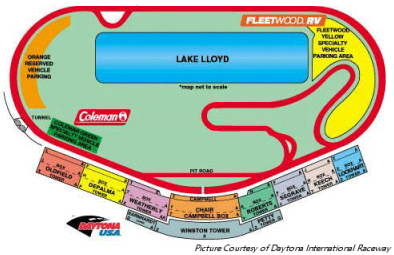 Daytona Track Statistics:
Distance: 2.5 miles
Shape: Tri-oval
Banking: 31° turns, 3° straights, 18° tri-oval
Frontstretch: 3,800 feet
Backstretch: 3,000 feet
For the non-racing fan, the name of a race indicates how many miles are driven. The Daytona 500 is a 500 mile race. On this 2.5mile tri-oval that means the race is 200 laps. The average speed of the race is 140-145 mph. But that’s some what of a misnomer as cars speed up and slowdown throughout the race on different parts of the track. During the race, cars can top 185mph or higher at any given point. The elite drivers can take a turn at an average speed of 140mph. But that average isn’t going to win you the race.
On the bottom right of the picture near the blue block, is Turn 1. There’s a very small section where a driver will turn back to the right to set up their entry into Turn 2. Down the back stretch past Lake Lloyd and drivers will set up for their entry into Turn 3 and Turn 4. The small turn on the front stretch isn’t considered to be a turn (no Turn 5), but it is a slight turn to a driver and requires muscle exertion to make it around the ‘corner’. In all, a driver with “turn left” 5 times on each lap of the race. That’s 1000 turns in total.
Let’s go back to your turn around the entrance ramp to the highway at 45mph. Little g-force, and a controlled 40 to 45mph speed until you reach the merge lane. Now do that 1000 times in 4 hours. How much upper and lower body strength do you think you’d use just going 45mph? Increase that effort again, by 100mph and a greater g-force on your body to remain upright in your seat. Not to mention to control the 3,500 lbs car that’s being pushed in the opposite direction.

In a recent article for the Bleacher Report, Dr. Punch explains the hand-eye coordination between ball players and Nascar drivers. “We use what is called rapid visual acuity. That tells you about an athlete’s eyesight and how well they can see the ball in baseball. The better you see the ball, the better the chance you have to be a good hitter. There is much that goes into the test, but one of the examples of the test is having a player read the label of a record as its spun at three different speeds. Most quality baseball players can read a label at 33-and-a-third revolutions per minute while most NASCAR drivers can read a label at 78 revolutions per minute.”
“Drivers’ eyes are able to slow down and focus better than others in sports.” he continues, “The elite drivers can even make out faces in the crowd as they are driving down the backstretch at Daytona at over 180 miles an hour.”
Think about this the next time you’re riding down the highway as a passenger in your car. Glance out the window at 55mph or faster and make out the details of an object that would be the equivalent size of a face in the crowd. How well would you do over a 2.5 mile distance?
What Other Athletes Say
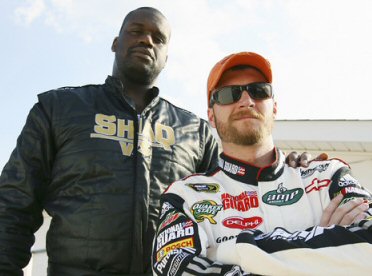
If Shaq says Drivers are Athletes,
I wouldn’t argue with him.
In the 2nd season opener of the TV series Shaq Vs, this giant athlete takes on Nascar in person. After spending a few laps (a few mind you) getting used to the car in a “practice” session…turning left…he’s asked for his opinion about talk radio saying Nascar Drivers are not athletes. He responds “..they can kiss my a$$.”
Shaq added that he can’t remember having a practice or game that took so much out of him, as quickly or in such a short period of time, as driving that car around the track did.
Brad Daugherty was the No. 1 pick in the 1986 NBA draft, and retired as the Cleveland Cavaliers all-time leading scorer. His career was cut short at age 30 by injury. He’d spent two decades molding and willing himself into one of the greatest performers in his trade. No doubt that he and Shaq would be considered athletes with enough experience to compare their NBA game exertion to an experience in a race car given the opportunity.
Daugherty has also spent his fair share of time in the seat of a race car. The Nascar commentator and Team owner commented in a November 2011 interview that: “They [Nascar Drivers] are tremendous athletes and I just have a high level of respect for these guys, because there is so much to it and so much involved to be successful at this level. It’s just incredible.”
In response to Jimmie Johnson’s 6th cup title win and a little dig at the “not an athlete” comment by McNabb, Troy Aikman tweeted this:
“Congratulations to 6x NASCAR Sprint Cup champion @JimmieJohnson…one of the good guys in sports…and an athlete too!” ~ Troy Aikman, November 19, 2013

Ryan Newman, Daytona 500 Champion
I’m of the belief that anyone who looks in the face of science and still says “you’re wrong” is simply interested in their own delusions. The science behind the conditioning and the effects of racing on a Nascar driver point to the confirmation that they are indeed athletes.
When other athletes who have experienced the effects in person, they add to the validity of the science and academic definitions.
If you can’t believe the science, definitions or other athletes, then for goodness sakes, pay a few bucks and spend sometime in a Richard Petty Nascar Experience and find out for yourself.
But I think the evidence is clear and plentiful. We can put this one to rest as well! Nascar drivers are indeed athletes!
.
Long live Nascar!
Go Tony #14, Ryan #31, Dale Jr. #88 and Joey #22!
And our other favorites: Trevor Bayne, Kyle Larson and Austin Dillon!
,
,
Visit Diandra Leslie-Pelecky website stockcarscience.com for more information.
 Originally Posted: April 18, 2010 / Updated: April 13, 2012 / Updated: November 7, 2013.
© 2013 Evilwordsmith.com. All Rights Reserved. Springwolf D.D., Ph.D.