Archive for the 'Spring's Musings' Category
The AC360 1940’s Doll Test Revisited
Earlier this year, AC360°, with the help of a seasoned team of researchers, conducted a pilot study based on the 1940’s doll test. In this pilot study, more than 130 kids were asked a series of questions about five cartoon dolls with varying skin tones. Half of the children were African-American and half were white, half were in the north and half in the south. [More @ AC360]
I was concerned when I asked my 7 year old son the same question and gave the same answer as the children in the AC360 test. The darkest child is the bad child. This perception isn’t something he gets from us at home. So where did he get it from? When I asked him why, he first said he didn’t know. It wasn’t until he looked at the picture and associated the “color” with a “person” that he said “Because he’s African-American”. It was that delay in his searching for a reason that caused me to realize it’s the test that implies racism and not anything he’s gotten from home, school or even the media. It was the test itself.

The method of these tests are flawed for a number of reasons.
- First off, the testers are guiding children to answer what the tester wants them to. They want the children to pick the darkest child in order to sensationalize the story. If this were a true test, one of the options given to children would be “none of the above”. If you asked this question of an adult, we have the ability to rationalize the question and even question it’s validity. Children have not developed this thought process. They want to provide an answer, they want to please you. So they choose a color and because of the image, they begin to associate the color, with the question and then with individual people. A child who didn’t associate ‘bad’ with African-American’s suddenly does so now.
- Next an assumption is being made that color equates to race. It doesn’t. And I can prove it. I’m going to provide a list of words, you state the color you associate to that word.
Water The Sun Fall (as in the season) Innocence Love Evil
What color did you give for Evil? Did you say black? Does that mean you believe all African-Americans are evil? “It’s not the same thing.” you say? That’s the problem, that’s what this test is doing. It’s making a leap from color to race and that simply is a huge assumption.
Through out history societies have placed meanings on colors. Anyone who sees a yellow ribbon associates that color with military service. Pink is now associated with breast cancer. No one can deny that going to a party decorated with black ribbons and bows announces the theme of a scary celebration. The association of color with esoteric emotions or feelings is ingrained into our society. It’s not just a thing of the past or something our ancient ancestors did when religion or spirituality was new. On Valentines day flower arrangements of red and pink fly out the door at stores. Weddings are associated with white innocence. Stores, barns and homes are filled with dark reds, browns, and orange decorations for the fall. Red, green and white dominate the landscape at Christmas. We associate blue with water, yellow with the Sun, pink with love, white with innocence and black with evil (or all things bad).
Children are exposed to concepts of color and their meaning at an early age. Beginning with children’s books and bedtime reading time. Scary stories, or moral tales designed to teach right and wrong overwhelmingly use color to visually express those lessons. Scary or bad tales are often foretold at night or in the dark, forever associating black or darkness with negative images. Consequently positive images are depicted in the light or with light colors. Halloween is associated with evil or bad things and the colors of black and orange. The evil witch always wears black. The bad guy in the western is the one with the black hat. The criminals in movies are often dressed in black leather. So how can young children not associate bad, ugly or dumb with the color black? We teach it to them in every visual expression throughout their young lives.
But because of all this visual stimuli, young children don’t associate color and race in the same way adults do. They acknowledge differences in appearance between people, but that’s about it. In trying to interpret what children are expressing when they talk about color, adults put their own perceptions of racism on the outcome of the conversation. Sometimes that can be used as a teaching tool to explain race. But sometimes it can be an assumption on our part as parents for what our child means.
When these tests use images of children instead of square blocks for instance, children begin to associate the colors with individuals they know in school or their community, instead of just color in general. Consequently these tests can begin to create an association of racism through their images and their questions. Instead of asking which “child” is bad, a tester can show a child a group of circles and ask which circle is bad. Does that mean the child associates African Americans as being bad people, rather than the color itself? No!
When my son gave me his answer to this test, we talked about kids in his school and those he has interacted with. Who he has issues with and why. Who he considers to be smart and who his friends are. Then we talked about the race of those kids and how everyone, regardless of race can be smart, funny, or mean and bad. Thankfully he has a wide range of diverse friends. One of his favorite people in his last class is a very smart and very cute African American girl named Amiya. SirEvil and I are convinced she will be President (as in POTUS), or CEO of some major company one day. The person he had the most trouble with was a white girl, so it was a perfect example of how color associations and race don’t go hand in hand.
I took some time to talk with him about the positive things of colors, such as black and darkness. Something as simple as pointing out the beauties of nighttime went a long way. Such as without darkness we wouldn’t be able to see the beauty of a night time starlit sky. A full moon is much more lovely at night than when we see it in daylight. Without the darkness we’d miss seeing some amazing animals such as raccoons, opossums, bats, and a variety of moths; not to mention lightening bugs.
Sometimes adults can make a mountain out of a mole hill purely based on their own bias or fears. Children are much more innocent and truly do not look at the world in the same way we do. It just takes a little effort to say there’s no difference between people who are from different races to reinforce tolerance instead of propagating stereotypes. Most parents tend not to talk about this issue at all, leaving it up to society and media to form the opinions our children develop. It just takes a little effort, a little expanded thought and putting yourself in their shoes instead of the sight of an adult. But it does take time and effort to have the conversation to help them understand tolerance and develop a healthy view of diversity.
Comments are off for this postSpring’s Big News
- Spring (aka Lady SpringWolf) is an author and deeply respected teacher of Pagan Metaphysics, Spiritual Enlightenment and personal development. For over twenty-five years, she has been committed to making esoteric material comprehensible and practical for everyone. Spring’s many gifts include clairvoyance, aura interpretation, past-life analysis, dream interpretation, numerology, Tarot, Reiki healing and Spiritual Psychology. Spring has facilitated thousands of individuals in developing greater awareness, balance and wholeness in their lives through her classes, workshops and lectures. She provides classes and services at her Spring’s Haven Spiritual Center in Virginia.
- Spring has written many articles for magazines around the world concerning Metaphysical principles and pagan practices. Now she is sharing her knowledge through the book series Pagan Metaphysics - Guides To Spiritual Enlightenment scheduled for release in the fall of 2011 from Schiffer Publishing.
- .
Making Home Affordable - Applying & Denied
Since 2007 the U.S. has been in a financial catastrophe. But for some reason, the only people who have gotten noticed are those laid off in 2008 when big business began to take a bigger hit. What happened to those thousands of people who were laid off in 2007, who’s companies closed and went out of business? Many of them have been left behind.
Long before Circuit City announced it was going into bankruptcy and closing it’s doors, it went through a major restructuring. That’s a fancy way of saying there were a series of layoffs. Early in 2007, in the summer of and later in the year soon before Christmas, over 3,000 people were laid off. Not just people in their stores, but also a large group of professionals in the companies main headquarters in Richmond, Virginia.
The capital of Virginia has seen it’s share of hardships like many other capital cities. Once a magnate for business, the “great recession” hit the city hard and it’s major businesses began closing their doors. Some for greener pastures, some to save money and focus on other regions where they have holdings. It’s not unlike other places around the U.S. or the world for that matter.
Everyone knows that without companies to work for, the American workforce suffers. Some more drastic than others. People lived off their unemployment. But those who were laid off in the first half of 2007 found themselves left out of the unemployment extensions. Those people began living off their savings, if they were lucky enough to have one. Once that was gone, they started hitting their 401k and other retirement accounts. When that was gone, they began trying to sell anything and everything they had in order to keep their home.
In steps the Government and President Obama’s Make Home Affordable program. An effort to save American homes for people caught in the financial catastrophe. The problem with the program is there’s no oversight of how banks and mortgage companies are applying the guidelines. Consequently only about 12 to 14% of people who apply are finding the help they need. There’s no appeal process, no one to go to for a second opinion. If the bank says no, it’s no and that’s the end.
But is it?
Check out the governments Making Home Affordable website (http://www.makinghomeaffordable.gov) and you’ll find a large amount of information and online tools to help you through the process.
Starting with; Don’t wait until your mortgage is past due and delinquent. If you now you won’t be able to make your payments in a month or 2, or 4; contact your mortgage company and ask them for paperwork to apply for the Making Home Affordable program.
Check out the Asked & Answered page on the governments website (http://www.makinghomeaffordable.gov/asked-and-answered.html). You’ll find a large amount of information that will fit your situation and some that wont.
Once you complete the application and submit it to your mortgage company, place a call to the Homeowner’s HOPE™ Hotline at 1-888-995-HOPE. They will help you find a financial counselor that can provide assistance and support for your application.
If you filed an application and your bank has turned down your request for aid, your best recourse is the Homeowner’s HOPE™ Hotline and a financial counselor. These counselors are approved by the Government to provide help with the Making Home Affordable program. They know how it works, what the guidelines are and how they are supposed to be applied.
The Counselor will take your financial information, what money if any you have coming into your home, what your expenses are and what assets if any you have. They run it through their system and help you determine if you qualify for a mortgage modification. Even if the bank has turned you down already. The Counselor/Company will develop an assessment report and contact the mortgage company. Their report is very detailed and they can educate the bank on how the program is to be applied to your specific case. They become your advocate.
The bank still has the option of ignoring the recommendation. But with this information in hand, you can take the process to the next step if you’ve already been denied. Contact your senators and congressperson. Don’t assume they won’t listen. They are just as interested in helping you and ensuring this program works properly as you are. Send them an email or call them. Don’t send a letter through snail mail; it takes way to long. If you send an email, make sure you follow up with their office the following day.
Keep in mind this is your house, if it’s worth fighting for you have to make the effort to fight. Keep looking for a job. Keep after your representatives. Keep calling your bank and keep in touch with them about what they’re doing. There’s nothing worse than thinking you are doing the right things only to receive a letter in snail mail notifying you that your house is now in foreclosure and sale of the property has been scheduled.
It’s your home..fight for it..you can do it.
Comments are off for this postSpring Receives Her Ph.D.
Big News This Week:
My final Dissertation for my Doctor of Philosophy in Pastoral Psychology passed review and approval on Dec. 2nd, 2009. Woohoo. I’m so excited and proud. It has been a long year of writing and researching. And now it’s finally done and approved. The Doctorate degree will be officially awarded in January 2010. I can’t wait.
The Dissertation is posted on Spring’s Haven @ http://springshaven.com/articles/index.shtml
Comments are off for this postHBO’s True Blood
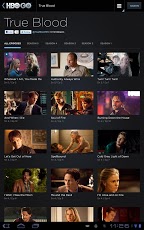
We’ve been watching HBO’s “True Blood” from Netflix. While I’ve seen a few of the episodes over it’s current seasons, I’ve missed a lot of them. SirEvil has never seen them so we decided to add the show to our Netflix list and start from scratch. One of the first things we decided is watching this show is like watching “baptist” porn. While the concept of sexual interaction is very much in tune with the historical mythology of Vampires, the show takes it to the very edge of what we’re used to seeing on American television, or even cable. Now for us, this isn’t a big deal; we’re hardly puritans. But it certainly surprises me that one of our dear friends (a very devout Christian) is totally enthralled with this show, with all it’s immoral concepts. For some reason I find that funny and interesting at the same time.
So after watching a few of the first episodes we find ourselves wishing Netflix would hurry up and send the next DVD. We’re ready for the next episode as soon as the previous one ends. A good sign for a show that it’s good. And this one, certainly is! If you haven’t seen it, it’s well worth putting on your Netflix list.